

A comprehensive “A self‑help guide for copywriters review” that dives into Dan Nelken’s mindset, structure, and headline strategies.
If you’ve ever stared at a blank page trying to come up with the perfect headline, you’re not alone. As copywriters, we know that great headlines are make-or-break, they’re what get people to stop scrolling, open an email, or read the first line of an ad. In this A Self-Help Guide for Copywriters review, we’ll explore why Dan Nelken’s book is gaining popularity among professionals and beginners alike.
I was first introduced to the book by a respected mentor in the copywriting field. Curious, I followed Dan Nelken on LinkedIn and checked out his videos, and I couldn’t stop laughing at his quirky examples, but they hit me hard with how spot-on they were.
This book feels like Dan Nelken’s personality poured onto the page: witty, uplifting, and full of practical tips. Whether you’re stuck in a creative rut or just want to nail sharper headlines, it’s like having a friendly mentor guiding you with clear, no-nonsense advice.
CONTENTS:
A Self-Help Guide for Copywriters Review: Why This Book Might Be the Only Headline Writing Manual You’ll Ever Need
I first heard about this book from a copywriting mentor I deeply admire. His recommendation led me to check it out, and I’m glad I did. Not long after, I followed Dan Nelken on LinkedIn, watched a few of his videos, and was drawn to his encouraging mindset and approachable, often humorous style.
Dan’s voice in the book feels just like those clips: friendly, down-to-earth, and full of practical wisdom. That personality shines through and makes this a genuinely engaging self‑help guide for copywriters.

Main review: What’s inside the book?
Before diving deeper, here’s a quick overview of the book’s structure:
-
The Creative Process
-
Headline Techniques
-
Types of Headlines
-
This Is Your Brain on Copywriting
Each section offers actionable tips and insights, especially geared toward crafting stronger headlines.

The Creative Process
This part’s all about how you think and work. Dan Nelken doesn’t just toss you a bunch of headline examples, he guides you through a way of thinking. He’s big on brainstorming before writing, getting your mind to collect and sort ideas before you even start crafting headlines.
One cool trick he shares is making “buckets” – lists of raw stuff like product benefits, features, truths, or customer insights. Jot down everything you know about what you’re selling, and boom, you’ve got a headline idea machine.
Dan also pushes you to ask quirky, product-related questions and not sweat the bad ideas. He says those duds are often the path to killer headlines. It’s a mindset that sparks creativity and takes the pressure off nailing it first try.
Great headlines aren’t great sentences—they’re great ideas expressed in words.
Headline Techniques
In this section, you’ll find common structures and techniques for headline-driven campaigns, and a few tips for crafting headlines.
Dan outlines 15 different headline techniques, each designed to give you variety and precision.
Every technique is broken down with:
-
A clear explanation of how it works.
-
Real-world examples.
-
Suggestions for when to use it.
What stands out is that Dan doesn’t present these like rigid formulas—he encourages experimentation while also showing what works and why. This makes the techniques feel practical, not mechanical.

Types of Headlines
“Here you’ll find a variety of commonly used headline structures. That’s it. That’s the blurb.”
Despite the brevity, this section is rich with headline categories like:
-
Question headlines.
-
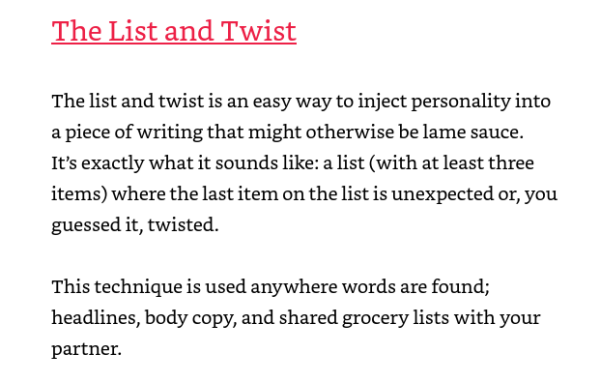
The list and twist.
- The Cliffhanger.
-
Twist the popular phrase or quote.
- The No-Headline Headline.
- ….
You can treat this section like a toolbox – when you’re stuck, flip to it for inspiration and structure.
This Is Your Brain on Copywriting
This is the most motivational part of the book. It’s less about tactics and more about why we write, and how to keep writing even when it feels hard. Dan talks about the psychological and emotional challenges copywriters face: self-doubt, fear of bad writing, imposter syndrome.
Instead of ignoring these struggles, he embraces them and offers encouragement. This section helps you trust yourself more, build creative confidence, and keep going even on tough days. It’s a heartfelt reminder that writing isn’t just about words, it’s about showing up and taking creative risks.
The best creatives fail more than the average creatives.
What’s missing: scope is narrow
One thing to note: A self‑help guide for copywriters is laser-focused on headlines. It doesn’t cover writing full‑length blog posts, emails, product descriptions, or long‑form content.
For many copywriters, headlines are crucial, and honing that skill can have a huge impact. But if you’re seeking tips on broader content types, you’ll need to supplement this with other resources.
Reader Impressions: Amazon & Goodreads Reviews
This book enjoys an impressive 4.8/5 rating on Amazon with hundreds of glowing reviews. Readers love its practicality, humor, and authentic voice. One reviewer said it’s “the most impactful book a copywriter can own,” while another wrote, “I laughed out loud at least three times while learning.”
On Goodreads, the book averages 4.5/5 stars, and many readers say it helped them write faster, with more confidence and clarity. It’s especially praised by in-house copywriters and freelance creatives alike, who value the book’s clear structure and Dan’s generosity in sharing his process.
If you want to read more from these platforms, here are the links:
Dan Nelken’s influence
By following Dan Nelken on LinkedIn and watching his content, you’ll get a sense of his easygoing tone and clever humor. That tone carries into the book – making the lessons feel like advice from a trusted friend.
In this A self‑help guide for copywriters review, it’s clear that Dan’s online presence and teaching style reinforce why the book works. It feels personal and authentic – not rigid or overly formal.
Key takeaways
Here’s a summary of what makes A Self‑Help Guide for Copywriters effective:
-
Focused on headlines, which are critical for grabbing attention.
-
Structured into four easy sections, making it approachable.
-
Authentic voice and humor, thanks to Dan Nelken’s personality.
Who this book is for?
If you’re a copywriter, content marketer, or small‑business owner who relies on strong headlines to drive clicks, opens, or conversions, this is a valuable read.
It’s especially useful if:
-
You struggle to write headlines that stand out.
-
You want quick, actionable techniques.
-
You appreciate a friendly, humor‑infused writing style.
If you’re seeking guidance on writing entire articles, landing pages, or email sequences, you’ll want additional resources. But as a headline toolkit, A self‑help guide for copywriters excels.

Final thoughts
As a quick recap, this A self‑help guide for copywriters review highlights a headline‑focused workbook grounded in creative practices and psychological insights. It’s practical, well‑structured, and backed by Dan Nelken’s engaging voice.
I discovered it thanks to a trusted mentor and Dan’s own online content inspired me to dive deeper. The book’s Amazon ranking and positive reviews reinforce its value in the copywriting community.
If headlines drive your copy strategy, this is a smart investment. It delivers clear methods, exercises, and mindset advice – all wrapped in an enjoyable reading experience.
Read More:


